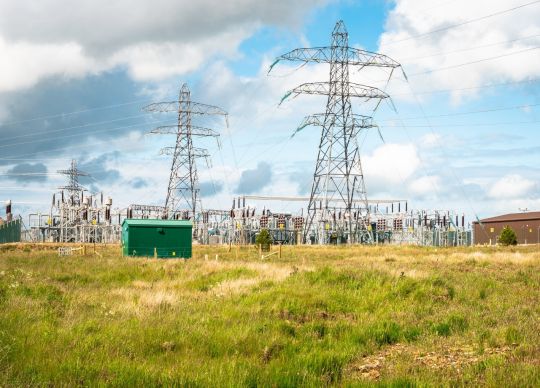
Scottish Hydro Electric Transmission has launched a £7.4bn multi-lot framework for civils, buildings, overhead line and underground cable works across its capital delivery portfolio in Scotland.
According to the official Sell2Wales contract notice, the framework is intended to appoint long-term strategic partners capable of delivering design, management, construction, testing and completion works. The scope supports network investment, asset renewal, customer connections and the transition to net zero.
Despite the Scottish Hydro name, this is not a hydro-electric generation story. Scottish Hydro Electric Transmission is the regulated transmission business that trades as SSEN Transmission. This framework is about the electricity grid: the infrastructure needed to move power across Scotland and into the wider UK system.
Key takeaways
- The framework has a potential value of up to £7.4bn, excluding VAT.
- It covers civils, buildings, overhead line and underground cable works.
- Six lots are included, with appointments potentially running for up to eight years.
- SSEN Transmission says more than £29bn is being invested across the north of Scotland by 2030.
- Workforce demand will span civils, high-voltage, cable, overhead line, substation, project controls, HSE and environmental disciplines.
What the framework covers
The framework is structured around six workstreams. Together, they show that grid expansion is not only about pylons or power cables. It also needs roads, foundations, substations, compounds, welfare facilities, buildings, environmental mitigation, testing, commissioning and handover.
| Framework lot | What it covers | Skills likely to matter |
|---|---|---|
| Civils works up to £10m | Site clearance, earthworks, access tracks, drainage, foundations, ducting, fencing and environmental mitigation | Site engineers, civil supervisors, setting out engineers, groundworks teams, environmental specialists |
| Civils works over £10m | Complex substation platforms, reinforced foundations, access routes, bridges, retaining walls, flood defence and works near live assets | Senior civil engineers, temporary works coordinators, construction managers, planners, project managers |
| Buildings and infrastructure | Storage buildings, training facilities, accommodation, welfare, offices, fit-out, M&E and building upgrades | M&E managers, design managers, building services engineers, BIM specialists, project coordinators |
| Overhead line pole construction | Design, foundations, pole erection, alignment, conductor stringing, testing and commissioning support | Overhead line specialists, HV engineers, lifting teams, access planners, commissioning support |
| Overhead line tower construction | Lattice towers, steel structures, foundations, tower erection, stringing, live asset interfaces and handover | Steelwork teams, civil engineers, OHL supervisors, HSE leads, construction managers |
| Underground cable construction | Route design, trenching, ducting, cable pulling, jointing, testing, reinstatement and commissioning | Cable specialists, jointers, HV engineers, route engineers, civils teams, commissioning engineers |
The notice makes clear that price is not the only award criterion, with the full criteria set out in the procurement documents. That detail matters because frameworks of this type are not simply about cost. They are about capacity, technical capability, delivery assurance and the ability to work across a live transmission network.
Why Scotland’s grid needs this level of investment
SSEN Transmission’s Pathway to 2030 programme sets out the wider context. The company says it is investing more than £29bn to upgrade network infrastructure across the north of Scotland by 2030.
That investment is being driven by a simple physical reality. Scotland has significant renewable energy resource, but power only becomes useful at scale when the grid can move it to where homes, businesses and industry need it.
SSEN’s programme includes new overhead lines, substations and subsea links. It also says the investment will support significant economic and employment opportunities across the UK, including 17,500 in Scotland and 8,400 in the north of Scotland.
That makes this framework more than a procurement exercise. It is part of the delivery machinery behind the UK’s clean power ambitions.
A portfolio of grid projects, not one single scheme
The north of Scotland transmission build-out is not one project. It is a portfolio of major works across different infrastructure types.
The wider programme includes subsea transmission links, major overhead line routes, new substations, converter infrastructure, underground cable works and the civils required to bring those assets together. Projects such as Eastern Green Link 2, Eastern Green Link 3, the Orkney transmission connection, Spittal to Peterhead and the Beauly to Peterhead 400kV overhead line help show the range of work involved.
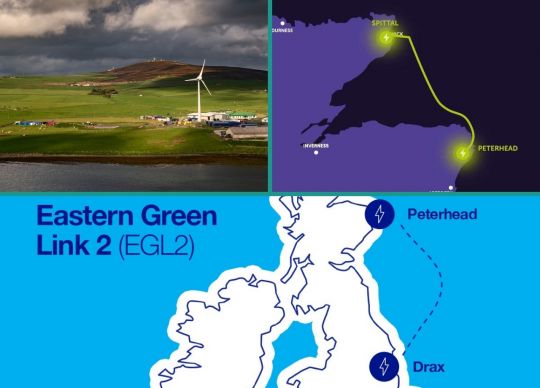
This is why the framework has been split across civils, buildings, overhead line and underground cable works. The transmission network needs all of them at once.
The workforce needed to deliver grid expansion
Energy & Utility Skills’ workforce assessment for the power and networks sector sets out estimated 2030 demand for critical occupations, including around 15,000 electrical trades, 13,500 mechanical trades, 8,000 project controls technicians, 7,500 quality assurance and control roles and 4,000 commissioning engineers.
For electricity networks specifically, the same report says reinforcing Great Britain’s onshore electricity network to meet net zero could directly support 50,000 to 130,000 additional full-time equivalent jobs by 2050. It also identifies specialists and engineers, managerial roles and multi-skilled craft roles as areas expected to face the greatest workforce gaps.
The construction market adds another layer. CITB’s latest Construction Workforce Outlook for Scotland forecasts infrastructure output in Scotland to rise by 5.0% per year on average between 2026 and 2030. It also estimates that Scotland will need 2,590 extra construction workers per year over the same period.
Engineering construction is under pressure too. ECITB’s 2024 Workforce Census found that 71% of employers reported hiring difficulties in 2024, up from 53% in 2021. Its 2026 to 2030 strategy also forecasts that 40,000 additional workers could be needed for major projects, including those linked to net zero, by 2030.
The challenge is not only funding the grid. It is mobilising and sequencing the workforce to build it.
What this means for candidates
For candidates, transmission is becoming one of the most important long-term opportunity areas in energy and infrastructure.
The framework points towards demand across several disciplines:
- Civil engineering and enabling works
- High-voltage electrical engineering
- Overhead line construction
- Underground cable installation and jointing
- Substation construction and commissioning
- Project controls and planning
- HSE and environmental management
- Commercial and contract management
- Site supervision and construction management
Experience from utilities, energy, regulated infrastructure, major civils, M&E and heavy industrial environments can all be relevant. Remote and rural delivery experience may also become increasingly valuable, especially on north Scotland programmes where access, accommodation, logistics and local supply chain capacity are part of the delivery challenge.
For engineers, supervisors and project professionals who want long-duration work tied to the UK’s energy transition, transmission is a market to take seriously.

What this means for hiring managers
For hiring teams, the message is equally clear. Grid expansion will compete for many of the same people already needed across energy, water, nuclear, defence, advanced manufacturing and wider infrastructure.
The pressure will be strongest where skills are both specialist and site-critical. High-voltage electrical engineers, overhead line specialists, cable jointers, commissioning engineers, planners, project controls professionals and experienced construction managers are not easy to replace at short notice.
The framework also shows how broad the workforce requirement is. Hiring plans cannot focus only on electrical roles. Delivery will need civil engineering, access planning, environmental compliance, temporary works, M&E, commercial management, HSE, quality, document control and handover capability.
The employers that plan early will have a clearer route to the people they need. The employers that wait until projects are already moving may find themselves competing in a much tighter market.
Millbank’s perspective
Scottish Hydro Electric Transmission’s £7.4bn framework is another sign that grid expansion has moved into the centre of the UK engineering and infrastructure market.
For candidates, it creates a stronger case for looking at transmission, utilities and grid delivery as long-term career routes. For hiring managers, it reinforces the need to plan around scarce skills, not just live vacancies.
The grid is no longer background infrastructure. It is one of the core delivery challenges behind the UK’s clean energy transition, and it will need a deep, mobile and technically capable workforce to deliver it.
For candidates
Working in transmission, utilities or major project delivery? Speak to Millbank about where demand is building across grid, energy and infrastructure roles.
For clients and hiring managers
Planning hires across grid, utilities or wider infrastructure delivery? Millbank can support workforce planning, scarce-skill hiring and project mobilisation across specialist engineering markets.
FAQs
What has Scottish Hydro Electric Transmission launched?
Scottish Hydro Electric Transmission has launched a multi-lot framework for civils, buildings, overhead line and underground cable works across its capital delivery portfolio in Scotland.
How much is the framework worth?
The official notice gives the framework a potential total value of up to £7.4bn, excluding VAT.
Is this about new hydro-electric generation?
No. This is about electricity transmission infrastructure. Scottish Hydro Electric Transmission is the regulated transmission business that trades as SSEN Transmission.
Why does this matter for renewable energy?
Renewable generation needs grid capacity. New transmission infrastructure allows electricity generated in areas such as the north of Scotland to move to homes, businesses and demand centres across the wider system.
What kinds of roles could be in demand?
Likely areas of demand include civil engineering, high-voltage electrical engineering, overhead line construction, underground cable works, cable jointing, substations, commissioning, planning, project controls, HSE, environmental management and commercial roles.
How long could the framework run?
The notice states that lot-specific framework appointments can run for up to eight years, depending on the lot structure and extension options.
Why is this relevant to the wider skills market?
Transmission expansion draws from the same pool of engineering, construction and project delivery talent needed by other major UK programmes. That makes workforce planning a central part of grid delivery, not a separate issue.