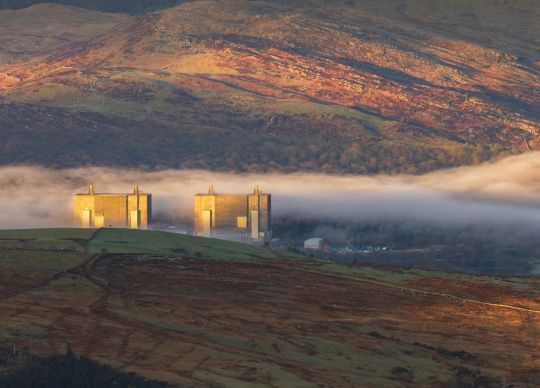
On 27 May 2026, Nuclear Restoration Services announced that Trawsfynydd had completed its Higher Activity Waste programme after 20 years of work.
The programme produced almost 2,300 individual waste packages, with the final package now transferred into secure storage on site. That clears the way for the next major phase of decommissioning: reducing the height of the station’s two reactor buildings.
For Trawsfynydd, this is more than a technical checkpoint. It marks the end of a long, largely unseen phase of work and the start of a much more visible change to one of the most distinctive nuclear sites in the UK.
Key takeaways
- 20-year waste programme completed at Trawsfynydd
- Almost 2,300 waste packages produced
- Site moving into reactor height reduction
- UK’s only inland nuclear power station
- Lead-and-learn site for Magnox decommissioning
What has happened at Trawsfynydd?
The completed programme focused on the retrieval, processing and secure storage of Higher Activity Waste at the Trawsfynydd site.
In this context, the work centred on intermediate-level waste. This is radioactive waste that is more active than low-level waste, but does not generate the significant heat associated with high-level waste. It can include items such as reactor components, graphite and sludges from radioactive liquid treatment.
That makes the milestone easy to understate from the outside. Nearly 2,300 packages sounds like a storage figure. In reality, it represents two decades of retrieval, conditioning, packaging and movement into a safer, more controlled state.
Nuclear Restoration Services said the work included the use of a robotic arm to remove material from deep storage areas, alongside specialist vacuum equipment for fine dust and small fragments. That detail matters. Decommissioning is often imagined as demolition, but much of the hardest work happens before anything visible changes on the skyline.
Rob Fletcher, Chief Executive Officer at Nuclear Restoration Services, described the completion as “the end of an era”.
That phrase fits. The site is not finished, but one of its most important hidden phases has now closed.
Why Trawsfynydd is such an unusual nuclear site
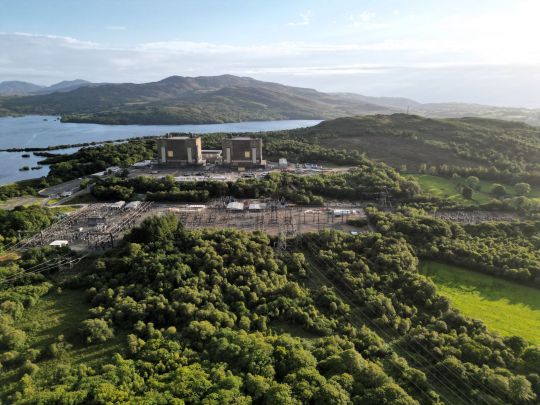
Trawsfynydd sits in Eryri National Park in north Wales. It is also recognised by the Office for Nuclear Regulation as the UK’s only inland nuclear power station.
Most UK nuclear power stations were built on the coast, where seawater could be used for cooling. Trawsfynydd was different. It used water from Llyn Trawsfynydd, a reservoir originally created in the 1920s for the Maentwrog hydro-electric scheme.
That inland location gives the site a character unlike any other former nuclear station in the country. It is not tucked away on a coastline. It sits within a landscape that millions of people associate with mountains, water and Welsh cultural identity.
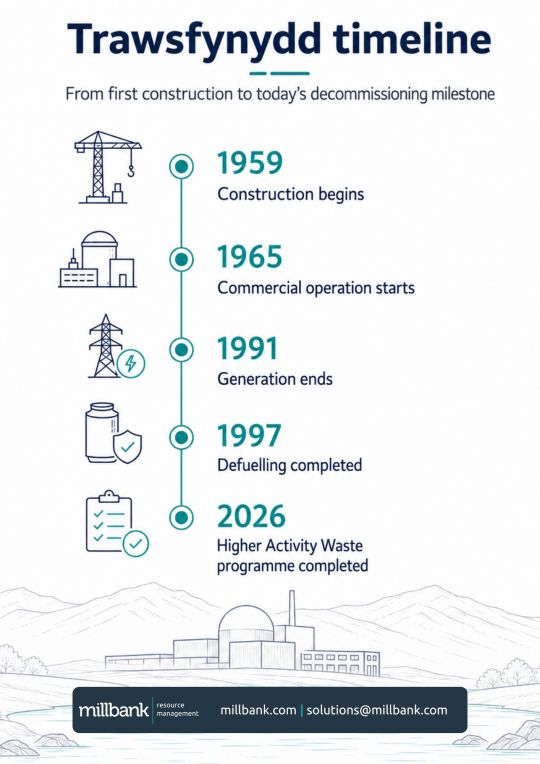
The station itself was part of the UK’s first generation of civil nuclear power. According to the IAEA’s PRIS reactor database, construction began in 1959, both units entered commercial operation in March 1965, and the station permanently shut down in 1991.
For about 26 years, Trawsfynydd generated electricity as part of the UK’s early Magnox fleet.
What was a Magnox power station?
Magnox stations were the UK’s first generation of commercial nuclear power stations. They used natural uranium fuel, graphite to slow the nuclear reaction, and carbon dioxide gas to carry heat away from the reactor core.
That heat was used to make steam, which drove turbines and generated electricity. In that sense, the power station still worked like a thermal power station. The difference was that nuclear fission provided the heat.
The name Magnox comes from the magnesium alloy used to clad the fuel. That fuel type shaped what happened after shutdown. Magnox fuel could not simply be left on site indefinitely, so defuelling became an early priority once generation ended.
The Office for Nuclear Regulation states that generation ceased in 1991 and defuelling was completed by 1997, with fuel sent to Sellafield for reprocessing. After that, the site’s challenge moved from operating a power station to managing the materials, structures and legacy waste left behind.
Decommissioning is not one job
Decommissioning is sometimes thought of as demolition. That is only one part of it.
The Office for Nuclear Regulation describes decommissioning as the final phase in the life of a nuclear installation, involving the administrative and technical work needed to remove some or all regulatory controls from a facility.
In plain English, it means moving a nuclear site from operation to a safer long-term condition, then eventually towards final dismantling or release.
At a site like Trawsfynydd, that journey includes several stages:
| Stage | What it means |
|---|---|
| Shutdown | The station stops generating electricity |
| Defuelling | Spent nuclear fuel is removed |
| Waste retrieval | Legacy material is recovered from storage areas |
| Conditioning | Waste is processed into a safer, stable form |
| Packaging | Waste is placed into engineered containers |
| Interim storage | Packages are held safely on site |
| Dismantling | Plant and buildings are physically taken apart |
The completed Higher Activity Waste programme sits in the middle of that journey. It does not mark the end of Trawsfynydd’s decommissioning story, but it removes a major piece of the puzzle.
The next change will be easier to see
The next major phase at Trawsfynydd is the reactor building height reduction project.
In October 2025, the government confirmed that Costain had been appointed as principal contractor for the work. The project is valued at up to £70 million, expected to take up to four years, and forecast to employ more than 100 people at peak.
The aim is to reduce the height of the twin reactor buildings by roughly half. This will involve partial demolition of the upper sections, alongside civil and remedial works to leave the retained structures safe, stable and ready for future decommissioning phases.
That physical change matters because Trawsfynydd has long been a prominent landmark in the Eryri landscape. The reactor buildings are part of the site’s identity, but they are also highly visible. Reducing their height will make decommissioning something that local people, visitors and former workers can actually see.
For many nuclear sites, progress is measured in safety cases, waste packages and regulatory milestones. At Trawsfynydd, the next phase will also be measured against the skyline.
A Welsh power station with a local story
Trawsfynydd was not just an engineering asset. It was a major employer and a visible part of the local economy.
The site’s Welsh identity was considered from the start. The UK Radioactive Waste Inventory notes that the Central Electricity Generating Board wanted Trawsfynydd to be recognised as a Welsh power station. A large pebble mosaic of a Welsh dragon was laid in the central courtyard and is now listed on the Register of Historic Parks and Gardens in Wales.
There is also architectural interest. Coflein, the historic environment record, states that the power station was built to the architectural specifications of Sir Basil Spence, with landscape design by Dame Sylvia Crowe.
Those details give Trawsfynydd a richer story than “old power station being dismantled”. It was a planned piece of industrial infrastructure, placed in a sensitive landscape, shaped by design choices and tied closely to the communities around it.
That local relationship continues today. In 2025, an NDA funding announcement quoted Trawsfynydd ward councillor Elfed Roberts saying the site still provided “good quality employment for over 200 local people”.
The site has stopped generating electricity, but it has not stopped shaping local work, skills and regional planning.
Why this milestone matters beyond one site
Trawsfynydd is part of the wider mission led by the Nuclear Decommissioning Authority, which is responsible for cleaning up the UK’s earliest nuclear sites safely, securely and cost effectively.
That mission is long term. The NDA’s published strategy covers work stretching across more than 100 years, with the organisation’s wider end-state planning extending far beyond a normal infrastructure programme.
Within that national picture, Trawsfynydd has a particular role. The site has been positioned as a lead-and-learn location for Magnox reactor decommissioning. That means its work is not only important locally, but also useful for how other former Magnox sites may be approached in future.
The learning is already being shared. Nuclear Restoration Services has said that innovations from the waste programme have been used to improve efficiency and reduce costs across the wider decommissioning programme.
That is the wider significance of the milestone. Trawsfynydd is not simply clearing up after its own operating life. It is helping build the methods, skills and confidence needed for the UK’s long-term nuclear cleanup mission.
Millbank’s perspective
Trawsfynydd shows why nuclear decommissioning should not be viewed as a winding-down exercise.
It is a long-duration engineering mission that depends on planning, safety, specialist delivery and continuity of skills. The work may happen slowly from the outside, but each milestone moves a site into a safer and more manageable condition.
The completion of the Higher Activity Waste programme is one of those milestones. The next phase will make that progress visible.
For candidates, Millbank supports careers across complex energy and infrastructure programmes, including nuclear decommissioning and engineering roles across the UK. View our latest roles.
For organisations delivering safety-critical energy programmes, Millbank supports specialist hiring across engineering, project controls and delivery functions. Contact our team.
FAQs
What milestone has Trawsfynydd reached?
Trawsfynydd has completed its 20-year Higher Activity Waste programme. The work involved retrieving, processing and securely storing remaining operational radioactive waste, producing almost 2,300 waste packages.
Why is Trawsfynydd important?
Trawsfynydd is the UK’s only inland nuclear power station. It is also a former Magnox site and a lead-and-learn location for reactor dismantling within the wider UK nuclear decommissioning programme.
What is intermediate-level waste?
Intermediate-level waste is radioactive waste that is more active than low-level waste, but does not generate the significant heat associated with high-level waste. It usually requires specialist retrieval, conditioning, packaging and long-term interim storage.
Why are the reactor buildings being reduced in height?
The reactor buildings are being reduced to create a safer, more stable retained structure and prepare the site for later decommissioning phases. The work will also reduce the visual impact of the buildings within the surrounding landscape.
Who is delivering the next phase of work at Trawsfynydd?
Costain has been appointed as principal contractor for the reactor building height reduction project. The work is valued at up to £70 million and is expected to take up to four years.
When did Trawsfynydd stop generating electricity?
Trawsfynydd permanently shut down in 1991 after around 26 years of electricity generation. Defuelling was completed by 1997.
Is Trawsfynydd fully decommissioned now?
No. The completion of the Higher Activity Waste programme is a major milestone, but not the final end-state. Further decommissioning work is still required, including the reactor building height reduction project and later dismantling phases.