
From a new home for the Army’s cyber specialists to offshore wind farms entering operation and one of Britain’s biggest battery factories preparing for production, these ten projects could make 2027 an important year for UK engineering.
Some projects begin with a shovel in the ground. Others reach their defining moment when machinery starts moving, power begins flowing or years of construction finally give way to operation.
The projects in this list are expected to reach one of those important moments during 2027.
Three have strong evidence of a physical construction start. Two nationally important electricity projects are also targeting 2027, although both remain subject to consent. Elsewhere, major developments in nuclear, advanced manufacturing, offshore wind and road infrastructure are expected to enter commissioning, production or completion.
The result is a varied picture of UK engineering activity, stretching from Gloucestershire and Somerset to Sellafield, the North Sea and Scotland’s offshore waters.
Major UK engineering projects reaching milestones in 2027
| Project | Location | Sector | Expected 2027 milestone |
|---|---|---|---|
| Duke of Gloucester Barracks Cyber-Regiment Facilities | Gloucestershire | Defence & Aerospace | Main construction starts |
| National Biosecurity Centre | Weybridge, Surrey | Critical Infrastructure | Main construction is expected to begin |
| Lightly Shielded Store 1 | Sellafield, Cumbria | Nuclear | Start of works |
| Sea Link HVDC Project | Suffolk and Kent | Critical Infrastructure | Targeted construction start, subject to consent |
| Norwich to Tilbury Electricity Transmission Project | East Anglia | Critical Infrastructure | Targeted construction start, subject to consent |
| Agratas Battery Manufacturing Facility | Bridgwater, Somerset | Advanced Manufacturing | Building completion and planned production |
| Inch Cape Offshore Wind Farm | Offshore Scotland | Energy Transition | Commissioning and commercial operations |
| Hornsea 3 Offshore Wind Farm | Offshore Yorkshire | Energy Transition | Commissioning and targeted completion |
| Sellafield Product and Residue Store Retreatment Plant | Sellafield, Cumbria | Nuclear | Active commissioning expected |
| A428 Black Cat to Caxton Gibbet Improvement Scheme | Bedfordshire and Cambridgeshire | Critical Infrastructure | Phased opening and completion |
How the projects were selected
These projects have not simply been chosen because they are large or have impressive investment figures.
Each one has credible evidence of a meaningful milestone during 2027. That could be the start of physical construction, the move into production, commissioning of complex systems or the opening of a major new asset.
Where planning or consent is still outstanding, this is stated clearly. Project programmes can move, particularly when they depend on regulatory decisions, equipment availability or complex construction schedules.
The milestones fall into five categories:
- Construction start: Physical work begins on the main asset.
- Conditional construction start: The developer is targeting 2027, but consent or another important dependency remains outstanding.
- Commissioning: Systems are installed, tested and prepared for operation.
- Production milestone: An industrial facility moves towards manufacturing output.
- Completion or opening: An existing construction programme reaches handover or public use.
Project values must also be treated carefully. The figures available for these developments include contract values, government investment, generating capacity and forward programme costs. They are not directly comparable and should not be combined into a single investment total.
1. Duke of Gloucester Barracks Cyber-Regiment Facilities, Gloucestershire

2027 milestone: Main construction starts in summer 2027
Sector: Defence & Aerospace
Contract value: £279 million
Client: Defence Infrastructure Organisation
Contractor: Bovis
Britain’s cyber defence capability may be digital, but the people behind it still need somewhere physical to train, work and live.
A £279 million redevelopment at Duke of Gloucester Barracks will create a new home for the British Army’s cyber regiment. The plans include specialist technical and training facilities, 248 rooms for serving personnel, 30 family homes and the refurbishment of existing buildings.
Construction is scheduled to begin in summer 2027 and complete in spring 2030.
The contract is also expected to create 92 jobs, including 32 apprenticeships. Commitments have been made for 25% of the on-site workforce and 40% of off-site manufacturing activity to come from the local area.
Those figures relate to the delivery of the construction contract rather than permanent military employment, but they give the project one of the clearest immediate workforce angles in this list.
Bringing the development to life will require more than conventional building work. Secure technical facilities place additional demands on communications infrastructure, mechanical and electrical systems, quality assurance and information security.
2. National Biosecurity Centre, Weybridge, Surrey
2027 milestone: Main construction is expected to begin
Sector: Critical Infrastructure
Announced investment: £1 billion
Client: Animal and Plant Health Agency and Defra
Expected opening: 2033
The National Biosecurity Centre is designed to protect the UK from a very different type of threat.
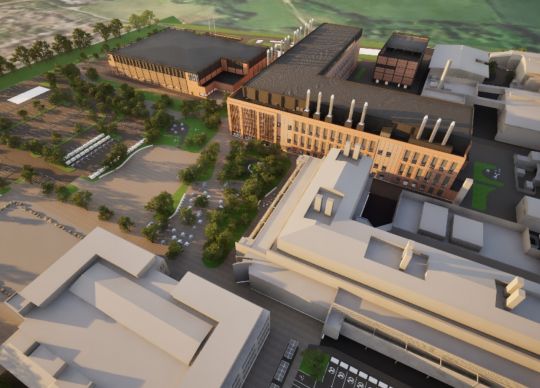
The centre will replace and modernise facilities at the Animal and Plant Health Agency’s Weybridge site. Scientists at Weybridge work on the diagnosis, surveillance and research of animal diseases, including threats that could affect public health, agriculture and the wider economy.
Preparatory activity has already begun, with main construction expected to start during 2027. The completed facility is currently expected to open in 2033.
The wider programme is associated with £1 billion of government investment, although that figure should not automatically be treated as the final cost of the physical construction work.
APHA’s reporting also places the programme on course for an initial capability milestone during 2027–28, followed by delivery of the main science hub in 2033–34.
Creating a modern high-containment science centre is a substantial engineering challenge. Laboratories must provide tightly controlled environments, reliable utilities and systems capable of protecting workers, research material and the surrounding community.
3. Lightly Shielded Store 1, Sellafield, Cumbria
2027 milestone: Start of works currently recorded for 30 June 2027
Sector: Nuclear
Recorded forward capital cost: £133.2 million
Client: Sellafield Ltd
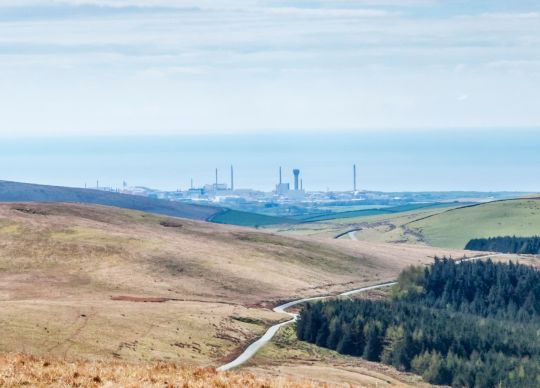
Sellafield’s mission will continue for many decades, supported by facilities designed to retrieve, treat and store nuclear materials safely.
One of the next developments is Lightly Shielded Store 1, often shortened to LSS1.
The National Infrastructure Pipeline currently records a start-of-works date of 30 June 2027 and an in-service date in 2029. It also lists the project as funded and procured.
The published £133.2 million figure represents a ten-year forward capital cost in 2024–25 prices. It is not necessarily the full lifetime cost of the facility.
A May 2026 update from the Nuclear Decommissioning Authority said the project was finalising its design, with pre-construction activity under way through Sellafield’s major-project delivery partnership.
The start date should be checked again before publication and as 2027 approaches. However, the combination of funding, procurement and pre-construction progress makes LSS1 one of the more credible nuclear construction starts in the pipeline.
4. Sea Link HVDC Project, Suffolk and Kent
2027 milestone: Construction is targeted, subject to consent
Sector: Critical Infrastructure
Client: National Grid Electricity Transmission
Known delivery partners: Sumitomo Electric, Siemens Energy and Van Oord
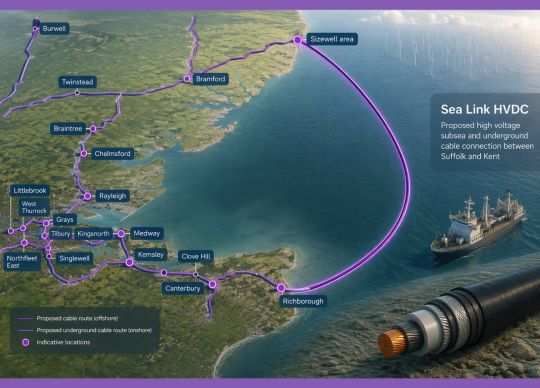
Sea Link is intended to strengthen the electricity network between Suffolk and Kent, helping move power to where it is needed as electricity generation and demand change.
The project includes approximately 130 kilometres of high-voltage direct-current cable, alongside underground routes, converter stations and associated infrastructure.
Sumitomo Electric says construction is scheduled to begin in 2027. Cable-manufacturing activity is also expected to take place at the Port of Nigg in Scotland, giving the project a supply-chain footprint stretching well beyond its route in England.
However, Sea Link had not received its Development Consent Order at the research cut-off. A decision was expected by 30 October 2026.
That means 2027 remains the project’s target rather than an unconditional start date.
If consent is secured and the programme moves forward, Sea Link will require an extensive mix of cable manufacturing, converter-station engineering, marine installation, civils and electrical integration.
5. Norwich to Tilbury Electricity Transmission Project, East Anglia
2027 milestone: Construction is targeted, subject to consent
Sector: Critical Infrastructure
Scale: Approximately 180 kilometres of transmission reinforcement
Client: National Grid Electricity Transmission
Norwich to Tilbury is one of the largest proposed upgrades to Britain’s electricity network.
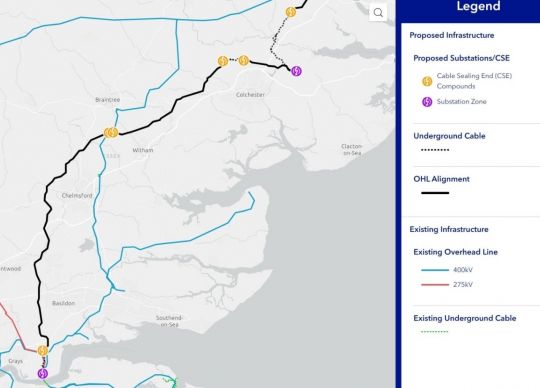
The programme would connect Norwich, Bramford and Tilbury through approximately 180 kilometres of new 400kV overhead lines and associated substation infrastructure.
Much of the electricity network was built for a very different energy system. As offshore wind and other sources of electricity expand, more capacity is required to move power between regions and connect it to homes and businesses.
The Development Consent Order examination closed on 10 August 2026, after which the application moved into its recommendation stage.
A 2027 construction start has been targeted, but the final consent decision and updated delivery programme will determine whether that date remains achievable.
If the project progresses, its scale could create demand across overhead-line construction, transmission civils, substations, logistics, land management and environmental mitigation.
6. Agratas Battery Manufacturing Facility, Bridgwater, Somerset
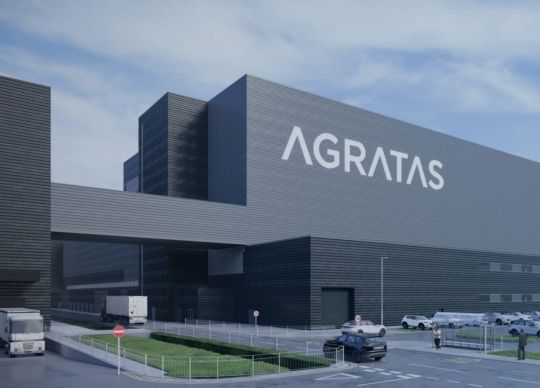
2027 milestone: Building One completion and planned battery-cell production
Sector: Advanced Manufacturing
Developer: Agratas
Anchor customer: JLR
Near Bridgwater, one of the UK’s most significant advanced-manufacturing projects is gradually taking shape.
By July 2026, activity was progressing across building cladding, drainage, groundworks and the central utilities building.
Current regional programme information indicates that Building One is expected to complete in 2027, with battery-cell production planned for later in the year.
The same regional update estimates that the construction workforce could peak at more than 2,200 people between spring 2026 and spring 2027. This is a peak construction estimate rather than a figure for permanent factory employment.
The most interesting part of the 2027 story will be the transition from building a factory to preparing it to manufacture at scale.
That means installing and testing equipment, validating processes, completing utilities, commissioning automated systems and preparing teams for production.
7. Inch Cape Offshore Wind Farm, Scotland
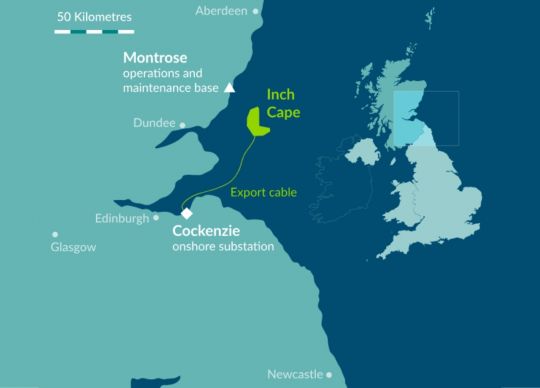
2027 milestone: Turbine commissioning and commercial operations
Sector: Energy Transition
Capacity: 1.1GW
Developers: ESB and Red Rock Power
Inch Cape is already well into construction, but 2027 is expected to be the year when its individual components come together as an operational wind farm.
The project reported substantial progress during 2026. By June, 54 monopiles had been installed, while the installation of transition pieces was completed in August.
The next stages include turbine installation, electrical connection, testing and commissioning before commercial operations begin.
At 1.1GW, Inch Cape will be a significant addition to the UK’s offshore wind fleet. Its delivery involves an international and regional supply chain, with Careys, Charles Brand, Smulders, Heerema Marine Contractors and Enshore Subsea named on the project’s construction page.
The 2027 workload is likely to move increasingly towards electrical completion, offshore commissioning, cable interfaces, high-voltage testing and preparations for long-term operations and maintenance.
8. Hornsea 3 Offshore Wind Farm, Yorkshire
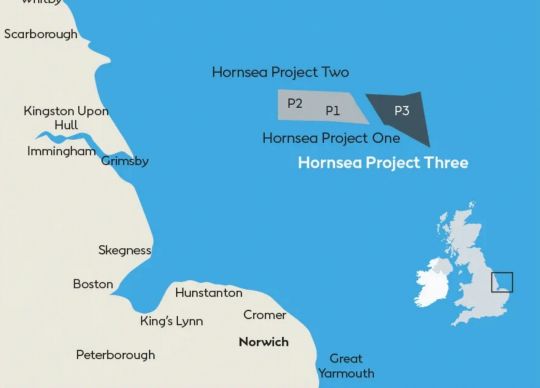
2027 milestone: Commissioning and targeted completion
Sector: Energy Transition
Capacity: 2.9GW
Published investment figure: £8.5 billion
Developer: Ørsted
Hornsea 3 is being developed on an enormous scale.
With a planned capacity of 2.9GW, the project is expected to become one of the world’s largest offshore wind farms.
Ørsted reached final investment decision in December 2023 and said the project was expected to complete around the end of 2027.
The project website describes Hornsea 3 as an £8.5 billion infrastructure development and continues to publish updates as construction progresses.
As with any large offshore programme, the published completion date should be checked again before the article goes live and during future updates.
The later stages will involve far more than installing the final turbine. Export systems, substations, cables and control systems must all be tested and integrated before the wind farm can move reliably into operation.
9. Sellafield Product and Residue Store Retreatment Plant, Cumbria
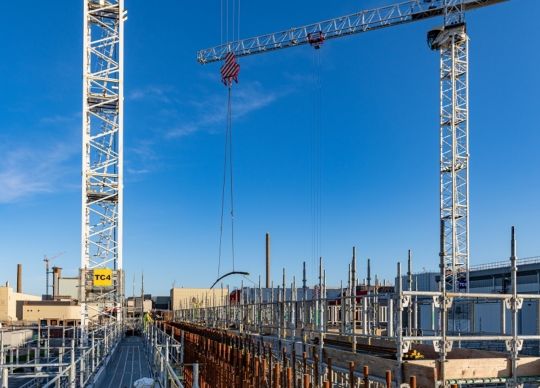
2027 milestone: Active commissioning expected
Sector: Nuclear
Recorded forward capital cost: £501.6 million
Client: Sellafield Ltd
Delivery partners: KBR, Jacobs, Morgan Sindall Infrastructure and Doosan
The Sellafield Product and Residue Store Retreatment Plant, usually referred to as SRP, has been one of the site’s largest and most complex construction projects.
The facility is designed to support the safe retreatment and management of nuclear materials.
The project has been delivered through Sellafield’s Programme and Project Partners model, involving KBR, Jacobs, Morgan Sindall Infrastructure and Doosan.
Sellafield previously said active commissioning was expected during 2027. A more recent Nuclear Decommissioning Authority update, published in May 2026, described the project as moving through its final delivery stages.
The National Infrastructure Pipeline records the facility as in construction, procured and funded. It also shows £73.5 million of expenditure during 2027–28. The separate £501.6 million figure is a ten-year forward capital cost rather than the full lifetime project value.
A current commissioning date should be confirmed before publication.
When SRP moves into active commissioning, the focus will shift increasingly towards system testing, configuration control, safety documentation, defect resolution and operational readiness.
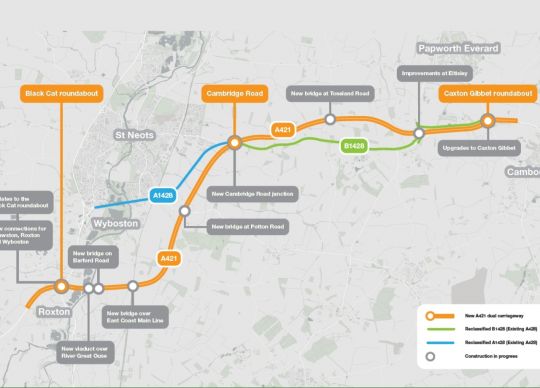
10. A428 Black Cat to Caxton Gibbet Improvement Scheme, Bedfordshire and Cambridgeshire
2027 milestone: Phased opening and completion
Sector: Critical Infrastructure
Client: National Highways
The A428 Black Cat to Caxton Gibbet scheme is designed to improve a heavily used route linking the East of England with the Midlands.
Construction began in December 2023, so this is not a project starting in 2027. Instead, 2027 is expected to be the year when much of the new infrastructure opens to traffic.
National Highways currently expects the majority of the scheme, including approximately ten miles of new dual carriageway and several key junctions, to open in spring 2027.
The final A1 underpass is then expected to open in mid-summer. Utility-diversion challenges have affected the later stages of the programme.
The final stretch of a major roads project can be just as demanding as the beginning. Pavement, drainage, structures, safety systems, environmental measures and traffic arrangements must all be completed and assured before handover.
A busy year for shared engineering skills
These projects belong to different sectors, but many will compete for similar experience.
High-voltage engineers will be required across electricity transmission and offshore wind. EC&I and commissioning capability will be important at Sellafield, Agratas and the National Biosecurity Centre.
Project controls, construction management and commercial expertise will be needed throughout the list.
Several projects will also reach the point where construction teams must begin handing assets over to operators. That transition requires people who understand both how a facility was built and how it must perform once operational.
Shared capability areas include
- Civil and structural engineering
- Mechanical and electrical systems
- High-voltage engineering
- EC&I
- Manufacturing engineering
- Automation and controls
- Testing and commissioning
- Project controls
- Commercial management
- Procurement
- Quality assurance
- HSEQ
- Operational readiness
- Supply-chain management
Could the 2027 timetable change?
Almost certainly, at least for some of the projects.
Major programmes rarely move in perfectly straight lines. Consent decisions, equipment availability, weather, ground conditions, design changes and commissioning results can all affect the timetable.
Sea Link and Norwich to Tilbury remain particularly dependent on consent.
Hornsea 3’s completion target and SRP’s commissioning programme should also be reconfirmed before publication. Agratas’s planned move into production will depend on construction, equipment installation and manufacturing-readiness activity remaining aligned.
Frequently asked questions
Which major UK projects are expected to start construction in 2027?
The strongest current candidates are the Duke of Gloucester Barracks Cyber-Regiment Facilities, the National Biosecurity Centre and Lightly Shielded Store 1 at Sellafield.
Sea Link and Norwich to Tilbury are also targeting 2027, but their construction dates remain subject to consent.
Which major UK manufacturing project is expected to reach production in 2027?
Agratas is expected to complete Building One at its battery-cell facility near Bridgwater, with production currently planned for later in 2027.
Which offshore wind farms could reach major milestones in 2027?
Inch Cape is expected to complete turbine installation and commissioning before commercial operations begin. Hornsea 3 is targeting commissioning and completion around the end of 2027.
Which nuclear projects should be watched in 2027?
Lightly Shielded Store 1 is scheduled to start works, while Sellafield’s Product and Residue Store Retreatment Plant is expected to move through active commissioning.
Which engineering skills could be in demand?
Common requirements include civil engineering, high-voltage systems, EC&I, mechanical and process engineering, manufacturing engineering, commissioning, project controls, quality and commercial management.
Are Sea Link and Norwich to Tilbury approved?
Both projects were still progressing through their respective consent processes at the research cut-off. Their status should be checked again once the relevant decisions have been published.
Millbank’s perspective
The 2027 pipeline shows why project stage matters when planning a workforce.
A team preparing a site for construction needs a different mix of experience from one commissioning complex electrical systems or preparing a factory for production.
The challenge is that many of these projects will draw from the same talent pools.
High-voltage specialists may be needed by transmission and offshore wind projects. Commissioning and EC&I professionals can move across nuclear, manufacturing and other regulated environments. Project controls and commercial expertise will be required almost everywhere.
Sources
-
Ministry of Defence and Defence Infrastructure Organisation, “£279 million investment to build new home for Army’s cyber regiment”, 16 January 2026:
www.gov.uk/government/news/279-million-investment-to-build-new-home-for-armys-cyber-regiment -
Animal and Plant Health Agency and Defra, “National Biosecurity Centre, Weybridge”, updated 13 May 2026:
https://www.gov.uk/government/publications/national-biosecurity-centre-programme-weybridge/national-biosecurity-centre-weybridge -
Animal and Plant Health Agency, Annual Report and Accounts 2024 to 2025, 6 May 2026:
https://www.gov.uk/government/publications/animal-and-plant-health-agency-annual-report-and-accounts-2024-to-2025/animal-and-plant-health-agency-annual-report-and-accounts-2024-to-2025-html-version -
National Infrastructure and Service Transformation Authority, National Infrastructure Pipeline, March 2026:
https://pipeline.nista.grid.civilservice.gov.uk/ -
Nuclear Decommissioning Authority, “Seven years of progress for Sellafield’s major project delivery partnership”, 21 May 2026:
https://nda.blog.gov.uk/seven-years-of-progress-for-sellafields-major-project-delivery-partnership/ -
Sumitomo Electric, “525kV HVDC cable for Sea Link project in the UK”, 11 December 2025:
https://sumitomoelectric.com/press/2025/12/prs075 -
Planning Inspectorate, Sea Link project information, updated 30 July 2026:
https://national-infrastructure-consenting.planninginspectorate.gov.uk/projects/EN020026 -
National Grid, Norwich to Tilbury project page, accessed August 2026:
https://www.nationalgrid.com/electricity-transmission/network-and-infrastructure/infrastructure-projects/norwich-to-tilbury -
Agratas, “Agratas shares summer progress update from Bridgwater”, 7 July 2026:
https://www.agratas.com/news/agratas-shares-summer-progress-update-from-bridgwater -
Great South West, Agratas battery manufacturing facility update, accessed August 2026:
https://greatsouthwest.co.uk/agratas-update/ -
Inch Cape Offshore Wind Farm, Construction updates, accessed August 2026:
https://www.inchcapewind.com/construction/ -
Ørsted, “Ørsted takes final investment decision on Hornsea 3”, 20 December 2023:
https://orsted.com/en/company-announcement-list/2023/12/oersted-takes-final-investment-decision-on-hornsea-80321 -
Hornsea 3, Project website and construction updates, accessed August 2026:
https://hornseaproject3.co.uk/ -
Sellafield Ltd, “Sellafield’s biggest construction project reaping benefits of 4D modelling”, 29 July 2022:
https://www.gov.uk/government/news/sellafields-biggest-construction-project-reaping-benefits-of-4d-modelling -
National Highways, “A428 Black Cat to Caxton Gibbet: latest updates”, accessed August 2026:
https://nationalhighways.co.uk/roads-and-travel/road-projects/a428-black-cat-to-caxton-gibbet/latest-updates/