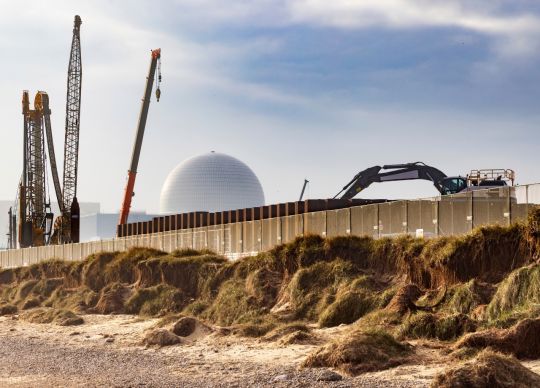
For the first time, reported employment across the UK civil nuclear industry has passed 100,000.
The Nuclear Industry Association’s 2026 Jobs Map records 102,606 people employed by participating members across the civil nuclear industry and its supply chain.
That represents an increase of 4,433 since 2025 and a rise of 67% from the 61,371 jobs recorded in 2021. The milestone demonstrates the scale of activity now taking place across nuclear new build, operations, decommissioning, fuel production, manufacturing and research.
However, it also raises a more difficult question: can the sector continue expanding its workforce quickly enough to support the programmes moving towards their next stages of delivery?
Key takeaways
- The NIA Jobs Map records 102,606 civil nuclear jobs in 2026.
- Reported employment has increased by 67% since 2021.
- 86% of civil nuclear jobs are located outside London and the South East.
- Hinkley Point C, Sizewell C, Sellafield and the existing nuclear fleet are important employment drivers.
- Future programmes will require a combination of early-career entrants, experienced nuclear professionals and transferable skills.
What does the 102,606 figure include?
The Jobs Map is compiled using workforce information submitted by participating NIA members. It includes employees across operators, new-build organisations, decommissioning businesses, fuel-cycle companies, manufacturers, engineering consultancies and other parts of the civil nuclear supply chain.
It is not a count of current job vacancies. It should also not be interpreted as 102,606 new roles created by recent nuclear projects.
The increase from 61,371 in 2021 to 102,606 in 2026 compares totals within the NIA’s participating-member series. Changes in membership or reporting practices could affect comparisons between individual years.
Defence nuclear is outside the main scope of the figure, although some engineering and supply-chain organisations work across both civil and defence programmes.
What is driving the growth in UK nuclear employment?
The sector is carrying out several different stages of the nuclear lifecycle at the same time.
Hinkley Point C is supporting a substantial construction and supply-chain workforce. Sizewell C is progressing mobilisation and preparatory activity. Sellafield continues its long-duration decommissioning and waste-management mission, while operating stations require engineering, maintenance and outage capability.
At the same time, investment is moving into small modular reactors, nuclear fuel production, high-integrity manufacturing and fusion research.
This creates demand across far more than reactor engineering.
Nuclear programmes need people working in civil construction, manufacturing, project controls, commercial management, quality, digital engineering, commissioning, operations and environmental management.
Major programmes shaping employment
| Programme or activity | Workforce position | Main areas of demand |
|---|---|---|
| Hinkley Point C | Around 26,000 workers supported across Britain in figures published during 2025 | Construction, engineering, manufacturing, project controls and commissioning |
| Sizewell C | Thousands of jobs expected during construction, including 1,500 apprenticeships | Civils, site infrastructure, engineering, commercial and project delivery |
| Sellafield | Long-term employment across the operator and extensive supply chain | Decommissioning, waste, safety case, engineering and project delivery |
| Project Gwyndod | Around 3,000 jobs forecast at peak construction, with wider supply-chain employment | SMR engineering, manufacturing, construction and systems integration |
| Existing stations | Around 5,000 jobs supported across operating sites | Operations, maintenance, outages and life-extension work |
| UK fusion programmes | Nearly 3,000 people employed by UKAEA, alongside future STEP requirements | Science, materials, digital, engineering and project delivery |
These figures use different definitions and periods. Peak construction roles, direct employees, apprenticeships and jobs supported across the supply chain should not be added together as though they represent one combined workforce total.
Where are UK nuclear jobs concentrated?
Nuclear employment has a strongly regional footprint. The NIA reports that 86% of civil nuclear jobs are located outside London and the South East.
The South West has experienced significant growth through Hinkley Point C and its wider supply chain. The project has created demand across construction, engineering, logistics, manufacturing and project delivery.
The North West remains one of the UK’s most established nuclear clusters. Sellafield anchors a large workforce in Cumbria, while Warrington is an important centre for engineering, consultancy and project capability. Fuel-cycle activity at Springfields and Capenhurst adds further depth.
The East of England is expected to grow as Sizewell C moves further into delivery. Published plans include thousands of construction roles and a significant apprenticeship programme.
In North Wales, Project Gwyndod is intended to bring the UK’s first Rolls-Royce small modular reactors to Wylfa. The development is forecast to create around 3,000 local roles at peak construction and support further employment across the UK supply chain.
Other important clusters include Oxfordshire’s fusion activity, the emerging STEP programme in Nottinghamshire and decommissioning work across Scotland and Wales.
Which nuclear skills are under the most pressure?
There is credible evidence of recruitment difficulty, but it would be misleading to suggest that every nuclear discipline faces the same shortage.
Government workforce analysis and regulatory sources identify particular pressure across:
- Electrical, control and instrumentation engineering
- Safety case and nuclear assurance
- Civil engineering and construction
- Welding, pipefitting and other specialist trades
- Commissioning and nuclear operations
- Project and programme management
- Project controls and planning
- Quality assurance and inspection
- Health physics and radiological protection
- Digital engineering and cyber security
The Office for Nuclear Regulation has previously cited research in which 80% of nuclear employers reported talent shortages. This indicates widespread recruitment difficulty, but it is not a measure of the number of vacancies across the sector.
Demand also changes as projects progress. Civil engineering and construction may dominate one phase, while testing, commissioning, operations and maintenance become more important later.
Does the sector need another 40,000 workers?
The Nuclear Skills Plan has identified a requirement for approximately 40,000 additional skilled workers by 2030.
That figure cannot simply be added to the NIA’s 102,606 civil nuclear jobs.
The Jobs Map covers participating organisations in the civil nuclear industry. The wider skills requirement addresses both civil and defence nuclear and uses a different baseline and forecasting method.
Some later reporting has suggested that the remaining gap against expected 2030 demand may have reduced as recruitment and workforce programmes have progressed.
There is also replacement demand to consider. Retirement, career movement and competition from other engineering sectors mean employers must recruit people to retain existing capability as well as expand it.
The evidence therefore points towards a substantial workforce challenge, but not a single national shortage that can be represented accurately by one number.
Where will the additional workforce come from?
Apprenticeships and graduates
Apprenticeships are essential for developing technicians, tradespeople, operators and engineers over the long term.
Hinkley Point C has created more than 1,000 apprenticeships. Sizewell C plans to support 1,500 during construction, while Sellafield reported more than 750 apprentices training across 24 pathways in 2026.
Graduate schemes and technical placements are also developing capability across engineering, science, commercial, digital and project roles.
These programmes cannot immediately replace experienced safety-case specialists, commissioning leads or authorised operators. They must be combined with structured development and knowledge transfer.
Transferable skills
Professionals from other regulated and safety-critical industries can provide another route into nuclear.
Relevant backgrounds may include:
- Defence and aerospace
- Oil and gas
- Chemicals and process industries
- Conventional power
- Major infrastructure
- Advanced manufacturing
- Pharmaceuticals
- Software and cyber security
Employers still need to determine which nuclear knowledge, training or formal competence is essential. Transferable experience should widen the available market, not remove legitimate safety and regulatory requirements.
Experienced professionals and returners
Retaining established nuclear knowledge will be as important as attracting new entrants.
Experienced people are particularly valuable across safety case, design authority, commissioning, operations, radiological protection, quality and decommissioning.
Returner programmes, mentoring and structured knowledge transfer could help protect capability where retirement or career breaks have reduced the available pool.
What does the growth mean for candidates?
The milestone shows that nuclear offers a broader range of careers than many people may realise.
Candidates do not need to be nuclear physicists or reactor engineers. Opportunities extend to engineering, construction, manufacturing, project controls, commercial management, quality, safety, digital technology and supply chain.
When applying, candidates should:
- Explain experience gained in regulated or safety-critical environments.
- Identify relevant technical standards, responsibilities and project stages.
- Describe measurable outcomes without disclosing confidential information.
- Check location and site-attendance requirements carefully.
- State security clearance accurately and never describe expired clearance as active.
- Consider both permanent and contract routes according to career goals and project experience.
Some roles require previous nuclear experience, while others may consider applicants from comparable industries. Requirements vary by employer, programme and level of responsibility.
What should employers be planning now?
Headline employment growth does not guarantee that the right experience will be available in the right place or at the right programme stage.
Employers should map workforce demand against project schedules rather than relying only on total headcount forecasts.
This includes identifying:
- Which positions require established nuclear experience
- Where transferable skills could be considered
- Which roles should remain within the permanent organisation
- Where contract specialists can support defined programmes or delivery peaks
- How apprentices and graduates will be supervised and developed
- Which experienced employees hold knowledge that needs to be transferred
- How location, site attendance and recruitment timescales affect candidate availability
Permanent recruitment is particularly important where organisations need to retain safety, operational and design knowledge. Contract professionals can add valuable flexibility during construction peaks, specialist design packages, commissioning, outages and other defined requirements.
A balanced approach is likely to be more sustainable than relying entirely on either model.
Millbank’s perspective
Passing 100,000 reported civil nuclear jobs is an important milestone for the UK.
It demonstrates that investment in new build, operations, decommissioning, fuels, manufacturing and research is already supporting a substantial national workforce.
The next challenge is not simply increasing that number. It is ensuring that programmes can access the right capability when it is needed, while protecting the knowledge required for safe, long-term nuclear delivery.
That will require earlier workforce planning, stronger technical training, more effective movement between sectors and a clear distinction between permanent capability and project-based support.
For candidates: Explore Millbank’s current nuclear opportunities or submit your CV for consideration against suitable future roles.
For employers: If you are planning permanent or contract recruitment across a nuclear programme, contact Millbank to discuss your requirements.
Frequently asked questions
How many people work in UK civil nuclear?
The Nuclear Industry Association’s 2026 Jobs Map records 102,606 people employed by participating members across the civil nuclear industry and its supply chain. It is not a count of live vacancies or a combined civil and defence total.
How quickly has civil nuclear employment grown?
The NIA’s reported total increased from 61,371 in 2021 to 102,606 in 2026, representing growth of approximately 67%. The comparison relates to the NIA’s participating-member dataset.
Why are UK nuclear jobs increasing?
Growth is being supported by Hinkley Point C, Sizewell C mobilisation, Sellafield, existing station operations, decommissioning, fuel production, manufacturing and emerging programmes involving SMRs and fusion.
Where are most UK nuclear jobs located?
The NIA reports that 86% of civil nuclear jobs are outside London and the South East. The North West and South West are major employment centres, with future growth expected in Suffolk, North Wales and Nottinghamshire.
Which nuclear skills are most in demand?
Evidence points to pressure across EC&I, electrical engineering, safety case, quality, construction trades, commissioning, project controls, radiological protection and digital disciplines. Requirements differ by programme stage and location.
Do candidates need previous nuclear experience?
Not always. Some employers consider applicants from defence, energy, chemicals, infrastructure, manufacturing and other regulated sectors. Nuclear-specific training, security or formal competence may still be required.
Are nuclear jobs permanent or contract?
Both are available. Permanent roles support long-term knowledge, operations, safety and organisational capability. Contract roles can support specialist work packages, construction peaks, commissioning, outages and other defined requirements.
Does every nuclear role require security clearance?
No. Security and vetting requirements depend on the employer, programme, site and information involved. Candidates should follow the wording of the individual vacancy and describe any existing clearance accurately.