On 29 April 2026, Rolls-Royce SMR named Norwegian engineering firm Aker Solutions as its primary Module Partner and launched a formal search for a UK factory site. For engineers from oil and gas, offshore fabrication and advanced manufacturing, those two announcements together are worth looking at closely.
Who Is Aker Solutions and Why Does This Matter?
Aker Solutions is one of the most established engineering and construction contractors in the oil and gas sector. The company has delivered some of the most technically demanding offshore projects in the North Sea, including major scopes on Johan Sverdrup, Norway's largest oil field development in a generation. Its yards and engineering teams are built around assembling large, complex structures in controlled environments and integrating them into live energy infrastructure.
In its formal announcement of the partnership, Aker Solutions described the opportunity as bringing "proven capabilities in onshore facility development and modular construction" into nuclear energy for the first time. Chief executive Kjetel Digre noted the company would be "leveraging decades of oil and gas experience to unlock new opportunities in emerging energy markets."
That framing tells you something about the kind of skills Rolls-Royce SMR is now seeking. Not purely nuclear specialists, but engineers and fabricators who understand how to build complex systems to exact tolerances, in factories, ready for integration on site.
What the Partnership Actually Covers
Under the agreement, Aker Solutions will focus on the non-nuclear parts of the power plant, specifically what the industry calls framed modules. These are structural steel assemblies, built around standardised frames, into which pipework, cabling, mechanical systems and building services are integrated before the module ever reaches the power station site.
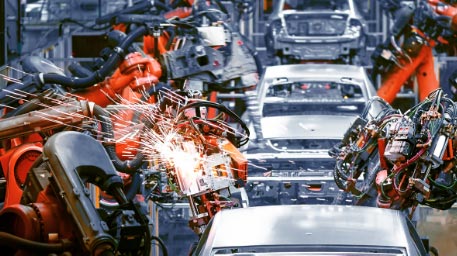
Rolls-Royce SMR's approach is built around this method. Rather than constructing most of a power plant on a single site over many years, approximately 90% of each plant will be manufactured in factory conditions, with finished modules transported by road and assembled on site. The company says a fully operational power station could be assembled in around 500 days once modules are ready.
The skills that method requires are ones that offshore platform builders, onshore process plant engineers, structural fabricators and module assembly specialists have already developed. Piping designers. Structural engineers. Quality inspectors used to working on safety-critical, high-pressure systems. People who know how to plan and execute a build where everything has to fit first time.
The Contracts Already in Place
Earlier in April 2026, Rolls-Royce SMR signed an Early Works Contract with Czech utility CEZ for up to six small modular reactors in the Czech Republic. CEZ had already taken a 20% equity stake in Rolls-Royce SMR in 2024. In Sweden, Rolls-Royce SMR has reached the final stage of Vattenfall's technology selection process for what could be a further three units at the Värö site near Ringhals. Domestically, the company holds a contract with Great British Energy Nuclear for units at Wylfa in North Wales.
Chris Cholerton, chief executive of Rolls-Royce, has described the goal as assembling "a world-leading supply chain to enable our modular, repeatable power plant solution."
Where the Jobs Will Actually Be
The majority of the work and the workforce on this programme will be located in manufacturing facilities, not on power station sites. A prototype module development facility is already operational at the University of Sheffield's Advanced Manufacturing Research Centre, where Rolls-Royce SMR has invested over £15 million to develop and test its factory-build approach. Sheffield Forgemasters has signed a memorandum of understanding to supply large-scale component forgings that few other UK manufacturers could produce at the required specification.
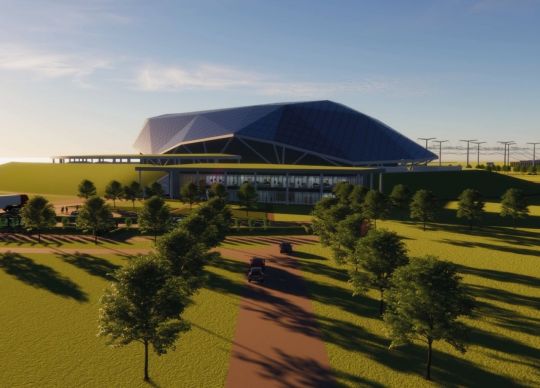
The factory site search announced on 29 April will determine where large-scale module assembly takes place. Locations with existing heavy fabrication infrastructure, strong logistics access and a skilled engineering workforce are well placed. Sites including Teesworks, Deeside in North Wales and locations across South Yorkshire have been associated with earlier stages of the process, with World Nuclear News confirming three UK sites had been shortlisted at a previous stage.
The Nuclear Industry Association has cited projections of up to 40,000 UK jobs supported by a fully scaled SMR programme by 2050, with domestic content potentially reaching 78% of total value.
Which Professionals and Businesses Should Be Looking at This
The most direct fit is engineers from oil and gas and offshore, particularly those with backgrounds in module fabrication, structural engineering, pipework, instrumentation and control, mechanical systems or quality assurance on safety-critical projects.
The overlap with aerospace precision manufacturing, defence fabrication and advanced automotive supply chain is also real. The Sheffield AMRC's Factory 2050 facility, where Rolls-Royce SMR's prototype modules are being built, was originally designed for aerospace and automotive-grade manufacturing. The quality systems, configuration control and traceability disciplines from those sectors transfer directly.
For businesses in those areas considering whether this programme represents a supply chain opportunity, the qualification requirements are worth understanding early.
Millbank's Perspective
We work across nuclear, energy, defence and advanced manufacturing, and we have watched the Rolls-Royce SMR supply chain take shape over a number of years. The Aker Solutions appointment signals the programme is now in a delivery phase, assembling the industrial partners needed to move from design and licensing into fabrication and assembly.
The roles that will follow sit across a wider range of disciplines than a purely nuclear brief would suggest. If you have relevant experience from another high-integrity sector and want to explore what a move into this space could look like, we are happy to have that conversation.
For candidates: You can view all of our current roles in nuclear and more. View our vacancies.
For hiring managers and supply chain businesses: If you are planning your workforce around this programme, we can help you map the disciplines and plan ahead. Contact us here.
Frequently Asked Questions
Do I need a nuclear background to work on the SMR supply chain? Not necessarily. Rolls-Royce SMR's modular manufacturing approach draws on skills from oil and gas, offshore fabrication, aerospace and advanced manufacturing. Roles in structural engineering, pipework, module assembly, mechanical systems and quality assurance are particularly relevant, even without prior nuclear experience.
What kinds of roles are likely to come through this programme? The module manufacturing scope covers structural steelwork, pipework fabrication, mechanical and electrical systems, instrumentation, HVAC and quality inspection. Beyond that, the programme needs project controls specialists, procurement professionals, supply chain managers, design engineers and commissioning technicians.
When are these jobs likely to materialise? Prototype module development is already under way in Sheffield and the factory site search is now live. Hiring for supply chain and manufacturing roles is expected to build progressively through 2026 and into 2027 as factory locations are confirmed and fabrication scopes are placed.
Which parts of the UK are most likely to benefit? The North East, South Yorkshire, North Wales and Cumbria are the regions most closely associated with potential factory and supply chain activity, based on existing infrastructure, workforce and the locations under consideration for the assembly facility.
How can Millbank help me get involved? Whether you are a candidate exploring your options or a business planning your SMR workforce, our nuclear and energy team can help you understand the landscape and identify where your skills or capacity fit. Reach out directly here.