Key takeaways
- UK's largest open die forging line under construction in Sheffield
- £1.3 billion programme rebuilding sovereign nuclear and defence manufacturing
- MoD-owned since 2021; workforce up from 600 to 770
- 18 new apprentices recruited in 2026 across nine disciplines
- Engineering demand rising across forging, metallurgy, machining and digital roles
In early May 2026, Sheffield Forgemasters began steelwork assembly on what will become the UK's largest open die forging line at its Brightside site in Sheffield. The 13,000 tonne forge sits at the heart of a £1.3 billion recapitalisation programme that is rebuilding the country's ability to produce the large, high-integrity forgings the nuclear and defence sectors depend on. For engineers, technicians and apprentices considering where to take their careers next, it is one of the most significant signals the UK manufacturing labour market has sent in years.
A 250-year-old business investing in its next generation
Sheffield Forgemasters traces its heritage to 1776, when George Naylor helped his cutlery partnership move into steelmaking through the construction of a crucible steel furnace in the city. The company is celebrating its 250th anniversary in 2026. It has been owned by the UK Ministry of Defence (MoD) since August 2021, when the MoD acquired it to secure the sovereign manufacture of large-scale, high-integrity castings and forgings essential to specific defence programmes.
Under MoD ownership, the workforce has grown from around 600 to 770. The recapitalisation programme is the physical expression of that secure future, replacing legacy assets from the 1960s and 1970s with state-of-the-art forging and machining facilities.
Inside the new Sheffield Forgemasters open die forging line
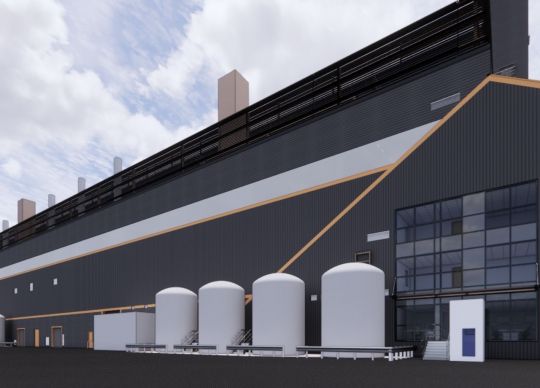
The new forge building stands 45 metres tall, more than ten metres higher than surrounding structures including the nearby Meadowhall shopping centre and the adjacent Ikea. It will house a 13,000 tonne heavy forging press, alongside new furnaces, quenching pits and cranes.
Open die forging shapes very large, custom components by compressing heated metal between simple dies that do not fully enclose the workpiece. The process refines the internal grain structure to deliver the strength, toughness and fatigue resistance that submarine hull rings, reactor pressure vessels and large naval shafts require. It is the right process for components no other forging method can produce at the scale defence and nuclear programmes need.
Alongside the forge, Sheffield Forgemasters is building a 30,000 square metre New Machine Shop on Weedon Street, home to 24 new machines including some of the world's largest five-axis vertical turning lathes. The two facilities together restore a sovereign UK capability that for decades has sat largely with overseas suppliers.
As Gareth Barker, Chief Operating Officer at Sheffield Forgemasters, put it in the May announcement:
The new Forge will bring a dramatic increase in capacity and capability for the manufacture of highly complex, large-scale forged components required for UK defence programmes and for civil nuclear developments.
Why the timing matters
The forge is being built into a UK industrial strategy that has placed defence and nuclear at the centre of growth ambitions. The Defence Industrial Strategy 2025 frames defence as an engine for growth, with spending set to reach 2.6% of GDP by 2027 and an ambition for 3% in the next Parliament. It is accompanied by a £182 million skills package and five new Defence Technical Excellence Colleges due to open in 2026.
In April 2026, Sheffield Forgemasters was specifically named in the £50 million South Yorkshire Defence Growth Deal alongside BAE Systems' new advanced artillery factory. The site is also central to the UK's continuous submarine production commitment, with its forgings feeding the Astute, Dreadnought and next-generation SSN-AUKUS submarine programmes through the main UK nuclear and defence primes.
On the civil nuclear side, the same capability supports Hinkley Point C, Sizewell C and the Rolls-Royce SMR programme. In 2022, Sheffield Forgemasters joined two 200 millimetre thick, three-metre diameter Small Modular Reactor grade vessel sections using electron beam welding in a single 140 minute pass, a process that would traditionally take months. The new forge and machine shop will scale this kind of work.
The disciplines now in demand
For engineers and technicians, the live question is where the talent gaps will be. Sheffield Forgemasters recruited 18 new apprentices for its 2026 intake across machining, CNC programming, metallurgy, foundry, melting, project management, environmental, materials testing and maintenance. Its retention rate on the apprenticeship programme sits at 81%, well above the national average.
Demand from the wider recapitalisation programme stretches further. Forging engineers and press operators. Metallurgists and materials scientists. Non-destructive testing technicians. Electrical, control and instrumentation engineers. CNC machinists and programmers. Design engineers, quality engineers and welding specialists, including in electron beam welding. Heat treatment specialists, project managers, digital and Industry 4.0 specialists, and the supply chain and production planning roles that hold all of it together.
This is being asked of a labour market that is already tight. According to the Institution of Engineering and Technology, 76% of UK engineering employers are struggling to recruit for key roles, and only 61% believe the current workforce is fit for the future. The Nuclear Skills Taskforce target of 40,000 new nuclear jobs by 2030 sits alongside a plan to double apprenticeship numbers in the sector.
Who should be paying attention
Three groups of engineers should be looking at Sheffield closely. The first is experienced forging, casting and heavy manufacturing professionals who already understand the discipline and want to work at the edge of it. The second is people who have built careers in adjacent sectors, including oil and gas fabrication, offshore wind and heavy power generation, where many of the underlying skills transfer cleanly into nuclear and defence.
The third is the early careers cohort. Apprentices at Sheffield Forgemasters train through the University of Sheffield Advanced Manufacturing Research Centre Training Centre and work directly on programmes of national strategic importance. As Jenna Carr, Early Careers Manager at Sheffield Forgemasters, has framed it: with the recapitalisation programme advancing at pace, the company is seeking out the most capable and committed individuals to take on new skills for the future.
For employers in the wider supply chain, the message is to plan workforce capacity now. Heavy forgings have long lead times, and the workforce that will operate the new forge and machine shop is being recruited and trained today.
Millbank's perspective
Sheffield Forgemasters is one of the clearest examples of how the UK is rebuilding sovereign industrial capability at pace, and sits firmly within the wider picture of the major engineering programmes shaping the country in 2026. The company recruits across the full range of engineering, manufacturing and technical disciplines, and its growth is tied directly to the nuclear and defence programmes we cover, including recent MoD contract awards and the broader UK industrial strategy. For candidates planning their next move, and for clients planning their workforce, this is a programme worth following closely.
If you are an engineer, technician or apprentice considering where your skills fit into the UK's nuclear and defence growth, speak to our specialist team. Get in touch here.
If you are planning your workforce around defence, nuclear or large-scale advanced manufacturing programmes, we can help you map the disciplines you will need and plan ahead. Contact us here.
Frequently asked questions
What is open die forging and why does it matter for nuclear and defence?
Open die forging shapes large pieces of heated metal between simple dies that do not fully enclose the workpiece, refining the grain structure for strength and toughness. It is the right process for very large, high-integrity components such as submarine pressure hulls, reactor pressure vessels and large naval shafts. These are the components no other forging method can produce reliably at scale.
Who owns Sheffield Forgemasters?
The UK Ministry of Defence acquired Sheffield Forgemasters in August 2021 to secure the sovereign manufacture of large-scale, high-integrity forgings and castings critical to UK defence programmes. The company continues to operate from its long-standing River Don Works site and is expanding onto the adjacent Weedon Street plot.
When will the new forging line be operational?
Steel framework for both the new forge and the New Machine Shop is expected to be complete by the end of 2026, with external cladding underway over winter. The New Machine Shop is targeted to be operational by the end of 2028. The forge will follow its own commissioning schedule, with mechanical and process equipment installation to follow the structural work.
What engineering disciplines will be in demand at Sheffield Forgemasters?
Demand will run across forging engineers and press operators, metallurgists, materials scientists, non-destructive testing technicians, electrical and instrumentation engineers, CNC machinists and programmers, design and quality engineers, welding specialists, heat treatment specialists, project managers, and digital and Industry 4.0 specialists. Supply chain and production planning roles will grow alongside the technical disciplines.
What apprenticeships does Sheffield Forgemasters offer?
The 2026 apprentice intake covered machining, CNC programming, metallurgy, foundry, melting, project management, environmental, materials testing and maintenance. Training is delivered through the University of Sheffield Advanced Manufacturing Research Centre Training Centre. Sheffield Forgemasters reports a retention rate of 81% on its apprentice programme.
Which defence and nuclear programmes does Sheffield Forgemasters supply?
The company supplies large forgings for the Astute, Dreadnought and SSN-AUKUS submarine programmes, as well as for the UK's civil nuclear projects including Hinkley Point C, Sizewell C and Rolls-Royce SMR. Work is delivered through the main UK nuclear and defence primes and the Atomic Weapons Establishment.
How does this fit into the UK's wider defence and nuclear plans?
The Defence Industrial Strategy 2025 commits defence spending to reach 2.6% of GDP by 2027, with an ambition for 3% in the next Parliament. The Nuclear Skills Plan targets 40,000 new nuclear jobs by 2030. Sheffield Forgemasters is also named in the £50 million South Yorkshire Defence Growth Deal announced in April 2026.