The UK government has introduced a new operational framework for critical energy infrastructure. Following the comprehensive recommendations of the independent Nuclear Regulatory Taskforce led by John Fingleton, the Department for Energy Security and Net Zero announced on 13 March 2026 a strategic overhaul of the nuclear planning and regulatory system.
Targeted for completion by the end of 2027, this update aims to streamline bureaucratic processes, optimise safety approvals, and accelerate the deployment of both foundational gigawatt reactors and agile Small Modular Reactors (SMRs).
The political and economic direction is highly positive for the sector. Chancellor of the Exchequer, Rachel Reeves, clearly defined the strategic imperative:
To build national resilience, drive energy security and deliver economic growth, we need nuclear. That is why we are overhauling the system, getting rid of duplicative or overly complex guidance, rules and regulations that have been holding back our nuclear ambitions.
For developers and tier-one contractors, this is the regulatory clarity the industry has been waiting for. However, as administrative processes accelerate and projects are brought to site significantly faster, the industry faces an immediate operational challenge in the capacity of the talent supply chain.
Securing highly specialised, security-cleared personnel is a strategic priority. In this accelerated landscape, proactive nuclear recruitment and workforce optimisation will underpin the commercial viability of the UK's clean energy mission.
The Hinkley Point C Benchmark: Proven Readiness
To understand the resourcing requirements ahead for upcoming mega-projects, we must look to the empirical data and lessons learned from Hinkley Point C (HPC).
As a partner deeply embedded in the nuclear sector, Millbank Resource Management has supported major infrastructure projects for decades. Having successfully partnered extensively on the HPC programme, our team understands the exact anatomy of a gigawatt-scale build. We have seen firsthand how first-of-a-kind construction environments evolve from initial groundworks to complex installation phases.
During the initial planning stages, HPC's Environmental Statement estimated a peak on-site workforce of 5,600 personnel. By 2024, as the project entered complex mechanical and electrical phases, the reality exceeded 12,000 active on-site workers, with a broader national supply chain supporting 26,000 jobs.
This significant increase was driven by the complex, overlapping nature of civil engineering and Mechanical, Electrical, and Heating (MEH) phases. When project schedules compress to recover time, substantial increases in daily headcount occur.
Millbank has successfully navigated these exact dynamics. We understand that traditional, reactive hiring cannot support this level of scalability. As the regulatory roadmap clears, our established talent networks and managed solutions are fully primed and ready for the next major project lifecycle.
The Next Wave: Sizewell C, Wylfa and SMRs
The March 2026 announcement confirms a multi-front nuclear expansion of significant scale. We are concurrently driving civil new builds, executing complex legacy decommissioning, and rapidly scaling the Defence Nuclear Enterprise to meet vital AUKUS and Dreadnought commitments.
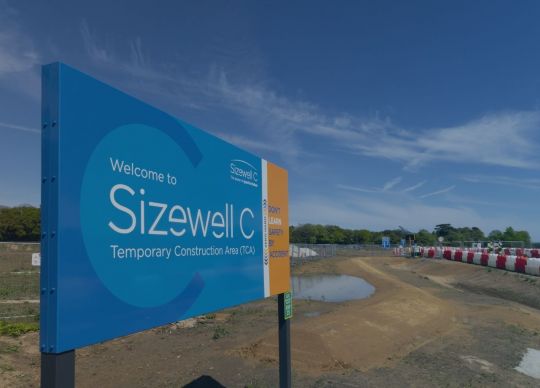
The government has explicitly greenlit Sizewell C on the Suffolk coast, which will support 17,000 jobs nationwide at peak construction. Nigel Cann, CEO of Sizewell C, noted the positive impact of the new reforms:
Sizewell C is central to Britain's new era of nuclear power, an era that will secure our energy future for generations. With the continued support of our regulators, supply chain, and alliance partners, the recommendations in this report can further strengthen our project by putting outcomes ahead of unnecessary processes.
Simultaneously, the government is backing the UK's first small modular reactors at Wylfa in North Wales. SMRs provide incredible agility and modular manufacturing capabilities, perfectly complementing the vital backbone provided by traditional gigawatt infrastructure.
Quantifying the Capability Gap
According to the 2024 Nuclear Workforce Assessment by Cogent Skills, the sector requires a total workforce of 120,000 by 2030. This demands the creation of 40,000 entirely new jobs within the decade.
Because the Defence Nuclear Enterprise and civil projects demand identical baseline engineering competencies and security clearances, they are locked in fierce competition for the same scarce talent. The government has recognised this, injecting £65.6 million into new research programmes and funding 500 new nuclear PhDs to cultivate sovereign technical talent.
However, to meet immediate operational demand, the sector must also proactively look outward today.
Unlocking Adjacent Talent Pools
The existing internal talent pool must be expanded to meet the speed of the 2026 reforms. The solution lies in systematically mapping and transferring highly skilled professionals from adjacent, heavily regulated engineering sectors. Millbank specialises in translating these competencies to provide our clients with fresh, clearance-ready talent pipelines.
Cross-Sector Transferability Matrix:
|
Origin Sector |
Transferable Professional Role |
Nuclear Destination Role |
Key Overlapping Competencies |
|---|---|---|---|
|
Automotive |
Functional Safety Engineer (ISO 26262) |
Nuclear Safety Systems Software Design |
Risk analysis, automated safety mechanisms, rigorous compliance. |
|
Manufacturing |
Production Line Engineer |
SMR Factory Fabrication Engineer |
Lean manufacturing, standardisation, modular assembly. |
|
Rail / Infrastructure |
PMO Lead / Systems Integrator |
Nuclear Project Controls / Planning |
Data integration, schedule recovery, major stakeholder management. |
|
Process Engineering |
Chemical Process Engineer |
Decommissioning / Waste Management Lead |
Hazardous material handling, late-life asset management, fluid dynamics. |
Managed Solutions: Mitigating Delivery Risk
Identifying external talent is only the first phase. In a sector defined by strict compliance, onboarding that talent efficiently presents significant hurdles.
The requirement for National Security Vetting (BPSS, SC, or DV clearance) introduces a multi-month lead time into the hiring process. In a traditional transactional recruitment model, this vetting gap can disrupt project momentum and lead to higher candidate drop-out rates. Furthermore, stringent IR35 legislation requires careful navigation to effectively engage the highly experienced flexible contractor workforce.
This is where strategic Managed Solutions provide a clear advantage. Deploying a Managed Service Provider (MSP) or Recruitment Process Outsourcing (RPO) model transforms talent acquisition from a reactive task into a proactive capability.
By partnering with Millbank for Managed Solutions, clients benefit from:
-
Continuous Talent Pooling: Building pre-vetted communities of passive candidates months before they are needed on site.
-
Compliance & Risk Mitigation: Assuming full responsibility for rigorous IR35 status determinations and Right to Work checks.
-
Vetting Management: Navigating the complex security clearance process to keep candidates engaged during the waiting period.
-
Standardised Benchmarking: Ensuring rate consistency across the entire supply chain to prevent internal cost inflation.
The Dual Imperative for 2026 and Beyond
The government has successfully cleared the regulatory path. The focus must now shift to execution and delivery.
For Clients and Tier-One Contractors: Do not wait for Final Investment Decisions to finalise your workforce strategy. Partner with a specialist resource management consultancy today to build your talent pipelines, secure your clearance processing slots, and lock in your supply chain frameworks.
For Engineering Professionals: There has never been a more secure time to transition your skills into the nuclear sector. With dedicated funding, a streamlined regulatory environment, and multi-decade project lifespans guaranteed, the nuclear sector offers excellent career longevity.
Whether you are supporting the deployment of cutting-edge SMRs or driving the construction of foundational gigawatt sites, the projects that matter are hiring now.
To discuss scalable workforce solutions or explore your next career move within the nuclear sector, connect with the specialist team at Millbank Resource Management today.