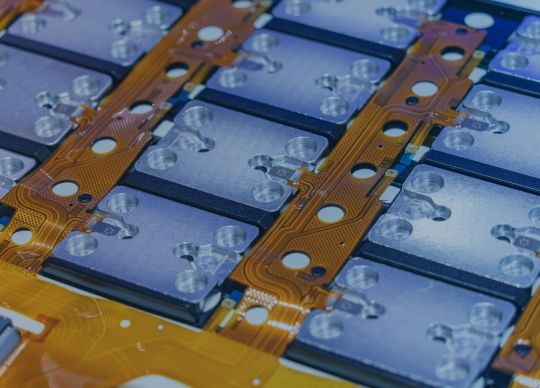
On 12 February 2026, UK Minister for Industry Chris McDonald MP officially opened the UK Battery Industrialisation Centre (UKBIC) Flexible Pilot Line (FPL) in Coventry.
Backed by a £38 million injection from the Faraday Battery Challenge, this open-access facility bridges the crucial gap between laboratory research and commercial gigafactory production.
The facility allows innovators to scale advanced chemistries (including sodium-ion and solid-state) and next-generation formats (such as 4695 tabless cylinders) with significantly reduced commercial risk. For the UK engineering and manufacturing talent market, this launch signals a massive shift in hiring demands.
Government and industry leaders view this facility as a structural necessity for the UK's industrial strategy.
"The new Flexible Pilot Line shows how government investment through our Industrial Strategy is helping UK innovators bring advanced battery technologies to market faster. By providing access to world-class equipment at lower cost and risk, UKBIC is supporting high potential firms and strengthening the UK's position in this vital industry."
Chris McDonald MP, UK Minister for Industry
"The FPL further strengthens our offering to industry, giving start-ups and SMEs a great opportunity to bring their innovative chemistries and materials to us to prove at scale before moving onto our ISL for full commercialisation. It's really the missing piece in the jigsaw of the UK’s battery ecosystem."
Sean Gilgunn, Managing Director of UKBIC
To understand the talent implication, we must understand the technical shift. Moving from a laboratory beaker to a continuous manufacturing line introduces complex variables in rheology, temperature control, and automated handling.
|
Production Phase |
Scale & Volume |
Primary Objective |
Engineering Skills Required |
|---|---|---|---|
|
Laboratory Scale |
Grams / Single Cells |
Prove chemical viability and fundamental energy density. |
Electrochemistry, Material Science, Academic Research. |
|
Flexible Pilot Line |
Kilograms / Low Thousands |
Validate continuous manufacturing processes and test new formats safely. |
Process Engineering, Prototyping, SCADA Automation. |
|
Gigafactory Scale |
Tonnes / Millions |
Achieve maximum yield, cost reduction, and continuous high-speed output. |
Six Sigma Quality Assurance, High-Volume Manufacturing, Logistics. |
A Cross-Sector Ripple Effect
This development is not exclusively an automotive success story. The high-performance batteries commercialised in Coventry will fundamentally power the wider energy transition across the entire UK infrastructure network.
-
Energy Infrastructure: As traditional nuclear provides the vital baseload backbone of our grid, grid-scale Battery Energy Storage Systems (BESS) are accelerating rapidly to provide the agile energy required to meet the massive electricity demands of expanding AI data centres.
-
Rail Electrification: The rail sector is actively pivoting towards Battery Electric Multiple Units (BEMUs) to enable discontinuous electrification across regional networks, reducing reliance on overhead line equipment.
-
Defence & Maritime: National security mandates increasingly require exceptionally energy-dense, solid-state power sources for autonomous systems, directed-energy weapons, and marine logistics.
The Talent Translation
Scaling these pilot technologies into high-volume mass production requires an agile, cross-sector workforce.
The Faraday Institution projects that domestic EV battery demand could support 270,000 jobs by 2040. Bridging a skills gap of this magnitude requires a coordinated transition of experienced engineers from legacy sectors. Battery manufacturing at the gigafactory scale is fundamentally a high-precision, continuous chemical engineering process.
The specific skills required are directly analogous to the competencies honed over decades in other highly regulated environments:
-
From Oil & Gas to Slurry Mixing: Professionals skilled in fluid dynamics and complex slurry rheology are urgently needed to manage the mixing of highly reactive chemical active materials.
-
From FMCG to High-Speed Assembly: The high-throughput extrusion lines and rapid cell-assembly processes require the precise SCADA automation and robotics expertise found in fast-moving consumer goods manufacturing.
-
From Pharmaceuticals to Quality Testing: Validating new battery chemistries requires the rigorous, clean-room mentality and precision Formation, Ageing, and Testing (FA&T) protocols perfected in the pharmaceutical sector.
What This Means For You
For Clients: De-Risk Your Talent Supply Chain
Validating your product chemistry is only half the battle. To scale safely from pilot to gigafactory production, you must de-risk your talent supply chain.
Partner with our Managed Solutions team to build a proactive resource pipeline. We map and integrate the precise cross-sector engineering expertise required for your commercial growth, acting as a seamless extension of your internal function.
For Candidates: Translate Your Expertise
The commercialisation of next-generation batteries is creating unparalleled career opportunities across the UK.
If you possess specialised manufacturing, automation, or process engineering experience from any highly regulated sector, your skills are highly transferable. Explore our current vacancies to transition your expertise into this vital, expanding sector.