Innovation has always been the heartbeat of the UK’s industrial sector. But the latest recruit at Sellafield Ltd is turning heads for a very specific reason: it has four legs, no tail, and can see radiation.
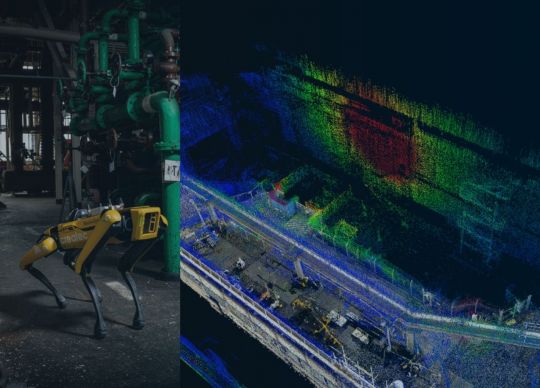
In a major step forward for the industry, Sellafield has confirmed the deployment of quadrupedal robots (specifically Boston Dynamics’ Spot) to accelerate decommissioning and improve safety in hazardous zones.
But while Spot is stealing the headlines, he isn't working alone. From the rail tracks of the North to the wind farms of the North Sea, a quiet revolution is taking place. The rise of Robotics and Autonomous Systems (RAS) is fundamentally changing not just how we build, but who we hire.
Here is the reality of the robot revolution sweeping UK critical infrastructure.
The Nuclear Pioneer: Spot’s Big Day Out
Sellafield is one of the most complex nuclear sites in the world. As the focus shifts towards accelerated decommissioning, the demand for high-quality inspection data has never been higher.
Historically, this presented a major conflict. We needed data from inside active cells, but sending humans into these environments required strict controls, extensive PPE, and strict time limits to manage exposure.
The solution? Send in the dogs.
Through the RAICo 1 programme (a collaboration involving the NDA, Sellafield Ltd, UKAEA, and the University of Manchester), the deployment of Spot represents a massive leap in remote engineering.
This isn't a standard off-the-shelf unit. Customised by Createc and integrated by AtkinsRéalis, this robotic platform can climb stairs and traverse rough ground that wheeled robots simply cannot handle. It sees the invisible, using radiation-resistant sensors for 360° imaging and 3D LiDAR scanning to map environments without a human ever stepping foot inside.
In a 2025 industry first, a customised Spot was even operated from outside the nuclear-licensed site boundary. This capability fundamentally changes the risk profile for nuclear sites, allowing for virtual site access that keeps humans safe while keeping the data flowing.
Beyond the Dog: The Wider RAS Revolution
Spot might be the poster child, but the integration of Physical AI (systems that perceive, reason, and act) is surging across every major sector. In 2023 alone, industrial robot installations in the UK reached a record high of 3,830 units (a 51% increase year-on-year).
Rail: The Digital Upgrade
The Transpennine Route Upgrade (TRU) isn't just about laying track; it is about building a Digital Railway. We are seeing specialist contractors use drones to clear vegetation and inspect bridges, keeping boots off the ballast and workers out of harm's way. Drivers are even training in fully immersive 3D environments, simulating new signalling systems before they go live. The result is safer tracks and smarter engineering, with the programme already saving 87,000 tonnes of carbon annually.
Offshore Energy: Unmanned Titans
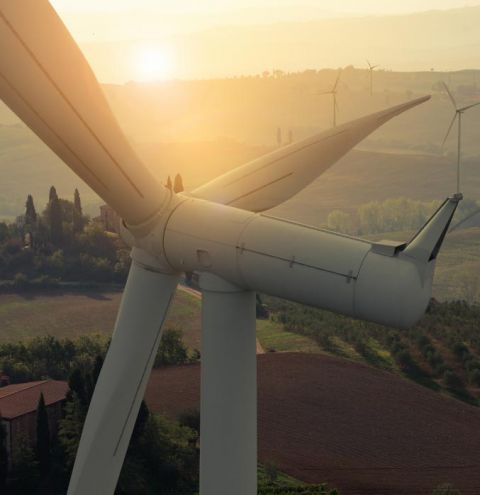
As we push for Net Zero, our wind farms are moving further out to sea. The Dogger Bank Wind Farm recently installed the world’s first unmanned High Voltage Direct Current (HVDC) platform. Innovations like the BladeBUG crawler robot are set to automate turbine blade inspections, turning what used to be a dangerous manual task into a remote maintenance job.
Automotive: The AI Mechanic
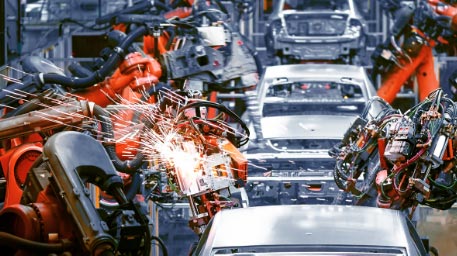
The days of reactive repairs are fading fast. The automotive sector is embracing AI-driven predictive maintenance. Fleet operators now use AI dashboards to monitor over 200 vehicle parameters in real time. Major manufacturers are using AI systems with 98% accuracy to predict failures before they happen, saving millions in unplanned downtime.
Defence: High-Tech Guardians
The UK’s Strategic Defence Review 2025 has placed autonomous systems at the core of a significantly more capable Army. From the DragonFire laser system engaging aerial threats to the Protector RPAS patrolling the skies, the focus is firmly on Human Machine Teaming (keeping soldiers in the loop but out of the line of fire).
Pharma: Sterile Precision
In the world of FMCG and Pharma, cleanliness is critical. Collaborative robots (cobots) are revolutionising sterile compounding. Automated IV robots can prepare medications with less than 1% dose deviation, freeing up nurses and lab technicians to focus on what matters most: patient care.
The Human Element: The Millbank Perspective
It is easy to look at this list and worry about the rise of the machines. But at Millbank, we see this as an evolution, not an extinction.
The shift to robotics does not remove the human; it elevates them. While we aren't seeing a total replacement of roles, we are observing a shift in the skills required to deliver major infrastructure projects. The engineers of tomorrow will need to be as comfortable with data integration as they are with mechanical systems.
This is where our expertise comes in. We aren't just filling seats; we are helping our clients understand how these technological changes impact their workforce planning. By identifying transferable skills and future demand, we ensure projects stay staffed and on schedule, no matter how advanced the tools become.
Whether you are a client looking to future-proof your teams or a candidate curious about how your role might evolve, the future is already here. And it might just have four legs.
Looking for support with your workforce strategy? From Managed Solutions to specialist technical recruitment, Millbank is your partner in the age of autonomy.