The United Kingdom is navigating a profound industrial transformation.
To achieve the mandate of becoming a 'Clean Energy Superpower' by 2030, the clean energy workforce must scale to 860,000 direct jobs, requiring a rapid influx of 50,000 science and engineering professionals.
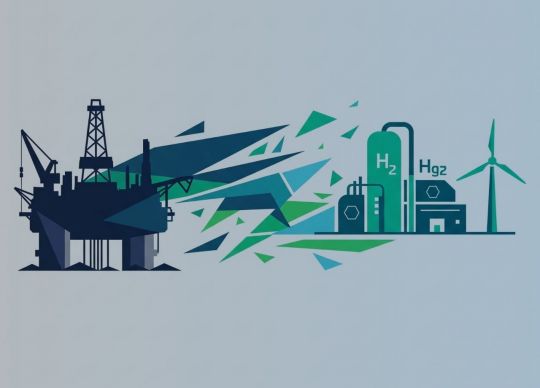
However, this is not a scenario of discarding our industrial past. Research indicates that over 90% of the existing offshore Oil & Gas workforce possesses medium to high skills transferability. The legacy of the North Sea basin is actively providing the fundamental engineering DNA required for the emerging Green Hydrogen and Carbon Capture, Utilisation, and Storage (CCUS) sectors.
Key Takeaways (TL;DR)
-
The Target: The UK aims for 10GW of low-carbon hydrogen production capacity by 2030.
-
The Talent Pipeline: Over 90% of traditional offshore energy professionals possess transferable skills for the clean energy sector.
-
The Core Synergies: High-pressure pipeline management, process safety, and subsurface engineering are the most critical competencies required for hydrogen sector jobs.
-
The Opportunity: CCUS recruitment in the UK is accelerating across integrated regional industrial clusters, specifically driven by Track 1 and Track 2 government sequencing.
The Clean Energy Superpower Mandate
The transition to a fully decarbonised energy grid relies on the commercialisation of both green electrolytic hydrogen and CCUS-enabled blue hydrogen. This dual approach ensures we can decarbonise hard-to-electrify heavy industries while maintaining energy security.
The political and economic focus has firmly shifted from theoretical planning to physical deployment and workforce optimisation. As Sarah Jones, Minister for Industry, recently said:
"We're on a mission to make the UK a clean energy superpower and low-carbon hydrogen is key to making it happen. We're ready to work with industry to seize this opportunity and by targeting strategic areas of the supply chain, drive a new era of growth and innovation." (Hydrogen UK)
Mapping the Technical Transition: Oil & Gas to Net Zero
To understand exactly how this workforce transition operates, we must look beyond the macro-economics and focus on the technical realities. The table below maps specific foundational competencies from traditional hydrocarbon extraction to their new applications in the clean energy matrix.
|
Traditional Oil & Gas Competency |
Clean Energy Application |
Key Technical Adaptation Required |
|---|---|---|
|
High-Pressure Pipeline Management |
Hydrogen transport networks |
Mitigating "hydrogen embrittlement" in steel alloys and managing lower volumetric energy density. |
|
COMAH & Major Accident Hazards |
Electrolyser facilities and CO2 pipelines |
Recalibrating safety cases for hydrogen flammability and dense-phase CO2 asphyxiation risks. |
|
Subsurface Engineering & Well Design |
Geological carbon sequestration |
Designing wells with Corrosion-Resistant Alloys (CRAs) to withstand acidic supercritical CO2. |
|
Well Intervention & Flow Assurance |
CCUS workovers and maintenance |
Managing extreme cryogenic shock (Joule-Thomson effect) during rapid CO2 decompression. |
|
Seismic Data Analytics |
Carbon storage verification |
Utilising 4D time-lapse monitoring to track underground CO2 plumes and verify permanent containment. |
Deep Dive: 3 Critical Transferable Engineering Skills 2026
The demand for Transferable Engineering Skills in 2026 is completely reshaping the talent market. Here is a closer look at the specific disciplines driving CCUS recruitment and green hydrogen expansion.
1. High-Pressure Pipeline Management and Flow Assurance
The UK relies on a vast, highly complex network of natural gas transmission pipelines maintained by skilled integrity specialists. The transition to a hydrogen economy relies entirely on this foundational pipeline management expertise.
However, flow assurance engineers must adapt their knowledge to accommodate the distinct thermodynamics of hydrogen. Because hydrogen molecules are significantly lighter and smaller than methane, engineers must calculate new system inertias and manage the severe risk of hydrogen embrittlement. As highlighted in recent ongoing UK research into hydrogen knowledge gaps, technical expertise in pipeline metallurgy, stress analysis, and fracture mechanics developed in the high-pressure oil & gas sector is vital to specify the correct material performance factors for dedicated hydrogen networks.
2. Process Safety and COMAH Regulations
The UK oil and gas industry operates under some of the most stringent major hazard regulatory regimes globally. This unparalleled capability in Process Hazard Analysis (PHA) and quantitative risk assessment translates directly to the design and operation of CCUS networks.
As outlined in the HSE Business Plan 2025-2026, safety engineers transferring their skills must recalibrate their models to align with new compliance standards. Hydrogen facilities require a deep understanding of extremely wide flammability ranges and rapid dispersion dynamics. Conversely, for CCUS infrastructure, the safety profile shifts to phase volatility and asphyxiation, prompting rigorous new regulatory proposals for CCUS and offshore hydrogen production. Safety engineers must apply their Control of Major Accident Hazards (COMAH) methodologies to develop robust thermodynamic dispersion modelling for supercritical CO2, protecting both site operatives and surrounding communities.
3. Advanced Subsurface Engineering and Well Design
The physical backbone of the CCUS sector lies deep underground. The UK intends to aggressively utilise depleted offshore reservoirs and saline aquifers to permanently store millions of tonnes of carbon dioxide. The geological mapping, petrophysical analysis, and drilling skills required to construct these injection wells are a direct transposition from petroleum engineering.
Drilling and well engineers must shift their core focus from resource extraction to permanent, leak-proof containment. When injected, CO2 must be maintained in a supercritical state. If this mixes with natural formation water, it creates highly corrosive carbonic acid. Well design engineers must therefore specify highly specialised Corrosion-Resistant Alloys (CRAs) and bespoke cements that resist chemical degradation over timelines spanning centuries.
Regional Clusters and The Path to Delivery
This technical transition is physically manifesting in integrated regional clusters, guided by strategic spatial planning for low-carbon industrial clusters. A prime example is the North West, where the HyNet project was officially selected by the Government as a Track 1 Industry Cluster.
These hubs, including vital infrastructural nodes like the Runcorn HyNet hub, demonstrate how traditional supply chains and new technologies work in complete synergy. By creating geographically concentrated centres of demand, the UK provides a localised, stable environment for the existing workforce to transition their skills without the need for mass relocation.
Clare Jackson, CEO of Hydrogen UK, highlights the urgency of cultivating this regional talent pipeline:
"This report is a pivotal step in realising the UK's potential in the hydrogen economy. By strategically investing in our supply chain and workforce, we can not only lead globally but also create thousands of jobs and drive significant economic growth." (Hydrogen UK)
Optimising the Clean Energy Workforce
Delivering megaprojects in emerging green technologies requires the rapid mobilisation of highly specialised engineering talent. As the regulatory boundaries for offshore hydrogen and CCUS infrastructure formalise in 2026, the industrial supply chain must respond with equal rigour.
Millbank Resource Management provides comprehensive workforce solutions and technical expertise to facilitate this transition. Whether through targeted executive search for first-of-a-kind project leaders or deploying integrated Managed Service Provider (MSP) programmes for regional clusters, we ensure your projects are resourced with the precise transferable skills required to succeed.
If you require strategic support in navigating the hydrogen sector job market or scaling your CCUS operations, our expert consultants are available for a detailed discussion.